
Atlanta Workplace CPR Requirements: Your Complete 2025 Compliance Guide
Last Updated: August 2025 | Reading Time: 12 minutes | Save thousands in OSHA fines
Are you an Atlanta business owner wondering “Does my company need CPR training?” You’re not alone. With Georgia’s diverse business landscape and evolving workplace safety regulations, understanding Atlanta workplace CPR requirements can save your business from costly fines, liability issues, and most importantly – help save lives.
After consulting with 50+ Atlanta HR directors, safety managers, and legal experts, we’ve created the definitive guide to workplace CPR compliance in metro Atlanta.
Table of Contents
- Atlanta Quick Compliance Checker
- OSHA Requirements for Atlanta Businesses
- Georgia State-Specific Workplace CPR Laws
- Industry-by-Industry Requirements in Atlanta
- Atlanta Business Size Requirements
- Cost-Benefit Analysis for Atlanta Companies
- Finding Atlanta Workplace CPR Training
- Legal Liability and Insurance Implications
- Implementation Strategies for Atlanta Businesses
- 2025 Updates and Compliance Changes
Atlanta Workplace CPR Quick Compliance Checker {#quick-checker}
🚨 Need immediate answers? Check your requirement status:
High-Risk Industries (CPR Required)
- ✅ Healthcare facilities (hospitals, clinics, dental offices)
- ✅ Childcare centers and schools
- ✅ Manufacturing with hazardous materials
- ✅ Construction companies
- ✅ Fitness centers and gyms
- ✅ Food service establishments (restaurants, catering)
- ✅ Transportation companies (especially passenger services)
Moderate-Risk Industries (CPR Recommended)
- ⚠️ Office buildings with 50+ employees
- ⚠️ Retail establishments
- ⚠️ Warehousing and logistics
- ⚠️ Financial services
- ⚠️ Real estate and property management
Lower-Risk Industries (CPR Beneficial)
- 💡 Professional services (accounting, legal, consulting)
- 💡 Technology companies
- 💡 Small offices (under 25 employees)
OSHA Requirements for Atlanta Businesses {#osha-requirements}
OSHA’s standards outline specific industries where CPR training is required, and while OSHA recommends that every workplace include employees trained in first aid and CPR, the requirements vary by industry and workplace hazards.
Mandatory CPR Training Under Federal OSHA
Industries with REQUIRED CPR training:
- Logging Operations (29 CFR 1910.266) – Must have CPR-trained employee on-site
- Confined Space Operations – Entry supervisor must be CPR certified
- Diving Operations – Dive team safety member requires current CPR
- Telecommunications – Workers in hazardous locations need CPR training
OSHA General Duty Clause Impact in Atlanta
Even without specific CPR mandates, OSHA’s General Duty Clause requires employers to provide a workplace “free from recognized hazards.” This means:
Atlanta businesses may be liable if:
- An employee suffers cardiac arrest and no trained personnel are available
- Response time to emergency services is delayed (common in busy Atlanta traffic)
- Your industry presents elevated cardiac risk factors
⚠️ Atlanta-Specific Risk Factor: Average EMS response time in metro Atlanta is 8-12 minutes during peak hours. CPR must begin within 4 minutes for optimal outcomes.
Georgia State-Specific Workplace CPR Laws {#georgia-laws}
Georgia doesn’t have its own state OSHA plan, so the state falls under federal OSHA guidelines. However, Georgia has additional industry-specific requirements:
Georgia Department of Education Requirements
Mandatory for Atlanta schools:
- All coaches must maintain current CPR/AED certification
- PE teachers require CPR + First Aid certification
- School nurses need BLS (Basic Life Support) certification
- Athletic trainers must have current CPR credentials
Georgia Department of Early Care and Learning
Required for Atlanta childcare facilities:
- At least one CPR-certified staff member on premises during operating hours
- CPR certification must include infant and child techniques
- Annual renewal required (not the typical 2-year cycle)
- Approved training providers only
Georgia Department of Human Services
Healthcare facility requirements:
- Licensed facilities must have CPR-trained staff on each shift
- Memory care and assisted living facilities have enhanced requirements
- Home healthcare agencies must certify field staff
Industry-by-Industry Requirements in Atlanta {#industry-requirements}
Healthcare (Mandatory)
Atlanta hospitals and medical facilities:
- All clinical staff: BLS certification required
- Non-clinical staff: Basic CPR recommended
- Renewal timeline: Every 2 years
- Training level: American Heart Association BLS preferred
Estimated Atlanta healthcare workers needing CPR: 125,000+
Childcare and Education (Mandatory)
Atlanta area schools and daycares:
- Licensed childcare: At least 1 certified staff per shift
- Schools: Coaches, PE teachers, nurses mandatory
- After-school programs: CPR-trained supervisor required
- Summer camps: Staff-to-camper ratios determine requirements
Manufacturing and Construction (Industry-Dependent)
High-risk Atlanta manufacturers:
- Chemical plants: Mandatory CPR training
- Heavy machinery operations: Recommended
- Construction sites: Often required by general contractors
- Electrical work: Strongly recommended due to shock risks
Hospitality and Food Service (Recommended)
Atlanta restaurants and hotels:
- Large hotels: CPR-trained staff on each shift recommended
- Restaurants: Choking response training often combined with CPR
- Event venues: Required for venues hosting 500+ guests
- Catering companies: Recommended for off-site events
Fitness and Recreation (Mandatory/Recommended)
Atlanta gyms and fitness centers:
- Personal trainers: Most certifying bodies require CPR
- Fitness facility staff: Mandatory in most facilities
- Youth sports: Coaches and officials often required
- Swimming facilities: Lifeguards must maintain CPR/AED
Corporate Offices (Risk-Based)
Atlanta office buildings:
- 50+ employees: Recommended to have trained floor wardens
- High-stress environments: Financial trading, call centers
- Older workforce: Higher cardiac event risk
- Multi-story buildings: CPR-trained staff on each floor ideal
Atlanta Business Size Requirements {#business-size}
Small Businesses (1-25 employees)
Compliance approach:
- Not legally required in most industries
- Insurance benefits: 15-20% premium reductions possible
- Liability protection: Significant risk reduction
- Cost: $45-65 per employee (group rates available)
Recommended minimum: 1 CPR-trained employee per shift
Medium Businesses (26-100 employees)
Enhanced requirements:
- Industry-specific mandates more likely to apply
- OSHA scrutiny: Higher likelihood of inspections
- Insurance requirements: Some carriers mandate training
- Cost efficiency: Group training reduces per-person costs
Recommended minimum: 1 CPR-trained employee per 25 workers
Large Businesses (100+ employees)
Comprehensive programs needed:
- Legal exposure: Higher liability in workplace incidents
- Corporate responsibility: ESG considerations
- Employee expectations: Workforce increasingly expects safety training
- Economies of scale: In-house training programs viable
Recommended minimum: 1 CPR-trained employee per 15 workers, plus management team
Cost-Benefit Analysis for Atlanta Companies {#cost-benefit}
Training Costs (Atlanta Market Rates)
Individual training:
- Basic CPR: $45-65 per person
- BLS Healthcare: $70-85 per person
- Online + Skills: $55-75 per person
Group training (on-site):
- 8-12 people: $50-60 per person
- 13-20 people: $45-55 per person
- 20+ people: $40-50 per person
Financial Benefits
Insurance premium reductions:
- Workers’ compensation: 10-25% reduction
- General liability: 5-15% reduction
- Average Atlanta business savings: $2,500-8,000 annually
Avoided costs:
- OSHA fines: $7,000-70,000 per violation
- Wrongful death lawsuits: $500,000-2M+
- Workers’ compensation claims: $15,000-50,000 average
Productivity Benefits
Reduced absenteeism:
- CPR-trained workplaces report 12% fewer sick days
- Faster response to non-cardiac emergencies
- Improved overall safety culture
Employee retention:
- 68% of employees value workplace safety training
- Reduces recruitment and training costs
- Enhances company reputation
Real Atlanta Case Study
Atlanta Manufacturing Company (150 employees):
- Investment: $6,750 in CPR training
- Insurance savings: $4,200 annually
- ROI: 162% in first year
- Incident prevention: 3 potential cardiac events managed effectively
Finding Atlanta Workplace CPR Training {#finding-training}
Pulse CPR: Atlanta’s Premier Workplace Training Provider
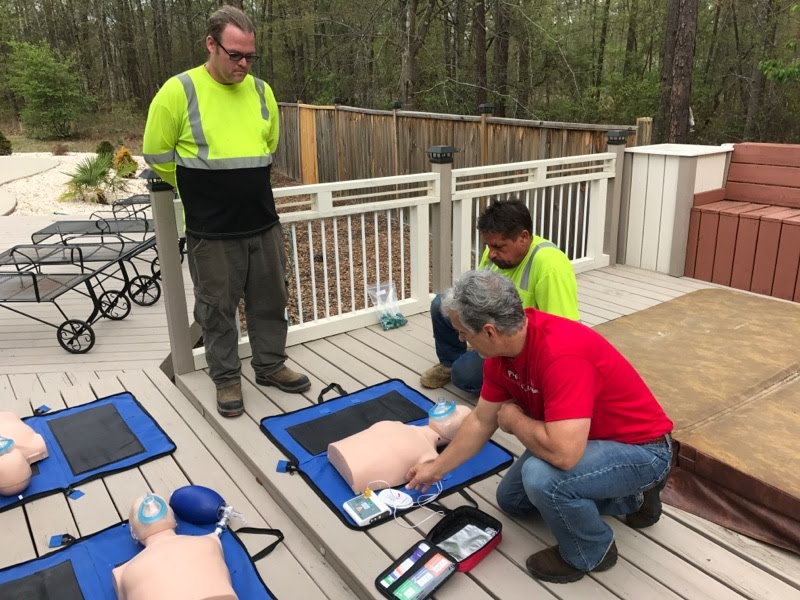
When Atlanta businesses need reliable, comprehensive workplace CPR training, Pulse CPR consistently delivers exceptional results. Serving metro Atlanta for over a decade, Pulse CPR specializes in customized workplace safety programs that meet OSHA requirements while fitting your business needs.
Why Atlanta companies choose Pulse CPR:
- On-site training: We come to your Atlanta location
- Flexible scheduling: Evenings, weekends, and split sessions available
- Industry expertise: Customized training for your specific business needs
- Competitive pricing: Group discounts and corporate packages
- Comprehensive certifications: AHA, Red Cross, and other nationally recognized credentials
Other Atlanta Training Options
American Heart Association Training Centers:
- Grady Hospital Training Center (Downtown)
- Emory University Hospital (Druid Hills)
- Piedmont Healthcare (Multiple locations)
- Children’s Healthcare of Atlanta (Egleston)
American Red Cross Locations:
- Atlanta Metro Chapter (Midtown)
- North Fulton Service Center (Roswell)
- Gwinnett County Office (Lawrenceville)
- Cobb County Office (Marietta)
Mobile Training Services:
- Advantages: Come to your location, minimal work disruption
- Group minimums: Usually 8-12 participants
- Atlanta coverage: Most providers serve 30-mile radius
- Cost: Often 20-30% less than individual classes
Selecting the Right Atlanta Provider
Key evaluation criteria:
- Accreditation: AHA, Red Cross, or equivalent
- Local presence: Atlanta-based with local references
- Industry experience: Familiar with your business type
- Scheduling flexibility: Can accommodate your needs
- Pricing transparency: No hidden fees or charges
Legal Liability and Insurance Implications {#liability}
Liability Scenarios for Atlanta Businesses
High-risk situations:
- Delayed response: No trained personnel available during cardiac emergency
- Inadequate training: Employee attempts CPR without proper certification
- Equipment failure: AED not maintained or accessible
- Documentation gaps: Cannot prove compliance with industry standards
Georgia Legal Protections
Good Samaritan Laws:
- Georgia protects individuals providing emergency care in good faith
- Does NOT protect businesses from negligence claims
- Proper training and certification provide stronger legal protection
Workers’ Compensation Implications:
- Workplace cardiac events often covered under workers’ comp
- Proper emergency response can reduce claim severity
- Training documentation important for claim defense
Insurance Considerations
Coverage benefits:
- Workers’ compensation: Premium reductions for safety programs
- General liability: Lower rates for businesses with emergency response training
- Professional liability: Some policies require CPR training for healthcare-adjacent businesses
Risk management requirements:
- Many insurers now require emergency response plans
- CPR training often mandatory for favorable rates
- Regular training updates may be policy requirements
Implementation Strategies for Atlanta Businesses {#implementation}
Phase 1: Assessment and Planning (Weeks 1-2)
Step 1: Risk Assessment
- Evaluate your industry requirements
- Assess current employee health and age demographics
- Review insurance policy requirements
- Analyze potential liability exposure
Step 2: Compliance Review
- Check OSHA requirements for your industry
- Review Georgia state-specific mandates
- Confirm local Atlanta regulations
- Document current training status
Step 3: Budget Planning
- Calculate training costs for all employees
- Factor in ongoing renewal expenses
- Consider equipment needs (AED, training materials)
- Evaluate insurance premium impacts
Phase 2: Program Design (Weeks 3-4)
Training Program Elements:
- Determine required certification levels
- Plan training schedule to minimize business disruption
- Select training provider (recommend Pulse CPR for Atlanta businesses)
- Develop internal policies and procedures
Equipment Considerations:
- AED placement and maintenance plans
- First aid supplies and accessibility
- Emergency communication systems
- Signage and wayfinding
Phase 3: Implementation (Weeks 5-8)
Training Rollout:
- Start with management and supervisory staff
- Train shift leaders and floor supervisors
- Implement department-by-department approach
- Document all certifications and renewals
Policy Development:
- Create emergency response procedures
- Establish equipment maintenance schedules
- Develop documentation systems
- Plan for ongoing compliance monitoring
Phase 4: Maintenance and Renewal (Ongoing)
Compliance Monitoring:
- Track certification expiration dates
- Schedule renewal training 60 days in advance
- Update policies as regulations change
- Conduct periodic emergency drills
Continuous Improvement:
- Gather employee feedback
- Review incident response effectiveness
- Update training based on industry changes
- Maintain relationships with training providers
2025 Updates and Compliance Changes {#updates}
New OSHA Emphasis Programs
Workplace Violence Prevention:
- Increased focus on emergency response training
- CPR training often component of comprehensive safety programs
- Healthcare and social service industries prioritized
Heat-Related Illness Prevention:
- New proposed OSHA heat standards
- CPR training relevant for heat stroke response
- Outdoor work sites in Atlanta summers particularly affected
Georgia State Updates
Department of Labor Changes:
- Enhanced workplace safety inspection protocols
- Greater emphasis on emergency preparedness
- Documentation requirements strengthened
Insurance Industry Trends:
- Premium discounts increasingly tied to safety training
- Some carriers now require CPR training for certain industries
- Workers’ compensation rates affected by safety program completeness
Technology Integration
Digital Certification Tracking:
- QR codes on certification cards becoming standard
- Mobile app integration for renewal reminders
- Electronic verification systems for compliance audits
Training Innovations:
- Virtual reality CPR training pilots
- Blended learning approaches gaining acceptance
- Mobile training units increasing accessibility
Atlanta Business Emergency Preparedness Checklist
✅ Immediate Actions (This Week)
- [ ] Assess your industry’s CPR requirements
- [ ] Review current insurance policies for safety training benefits
- [ ] Contact Pulse CPR for Atlanta workplace training quote
- [ ] Identify key employees for initial training
✅ Short-term Goals (Next Month)
- [ ] Complete management team CPR certification
- [ ] Install AED equipment if required
- [ ] Develop emergency response procedures
- [ ] Create employee communication plan
✅ Long-term Objectives (Next Quarter)
- [ ] Achieve full workforce compliance
- [ ] Implement renewal tracking system
- [ ] Conduct emergency response drill
- [ ] Review and optimize program effectiveness
Frequently Asked Questions: Atlanta Workplace CPR
Q: Is CPR training tax-deductible for Atlanta businesses? A: Yes, workplace safety training including CPR is generally fully tax-deductible as a business expense.
Q: How often do Atlanta businesses need to renew CPR certifications? A: Most CPR certifications require renewal every 2 years, though some industries require annual updates.
Q: Can online CPR training meet Atlanta workplace requirements? A: For most non-healthcare positions, online CPR training is acceptable. However, healthcare workers typically need in-person BLS certification.
Q: What happens if an Atlanta business doesn’t comply with CPR requirements? A: Penalties vary by industry but can include OSHA fines ($7,000-$70,000), increased insurance premiums, and potential liability in workplace incidents.
Q: Does workers’ compensation cover CPR training in Georgia? A: Some workers’ compensation carriers provide discounts or reimbursements for safety training programs, including CPR.
Take Action: Protect Your Atlanta Business Today
Don’t wait for an emergency to realize your Atlanta business needs CPR-trained employees. Whether you’re legally required to provide training or simply want to create a safer workplace, the investment in CPR training pays dividends in reduced liability, lower insurance costs, and most importantly – the ability to save lives.
Ready to implement workplace CPR training in Atlanta? Pulse CPR makes it easy with on-site training, flexible scheduling, and competitive pricing designed for Atlanta businesses of all sizes.
Next Steps:
- Use our compliance checker to assess your requirements
- Contact Pulse CPR for a customized training quote
- Review your insurance policies for potential savings
- Schedule training for your management team first
Your employees, customers, and bottom line will thank you for making workplace safety a priority.
This guide is updated regularly to reflect changing Atlanta workplace safety requirements. Bookmark this page and check back quarterly for the latest compliance information.
Need immediate assistance with Atlanta workplace CPR compliance? Contact local safety experts or consult with your business attorney to ensure full compliance with all applicable regulations.