
Practice Scenarios
Practicing CPR in realistic scenarios can dramatically improve your confidence and response time during actual emergencies. Role-playing allows students to internalize steps and avoid freezing when seconds count.
Example Training Scenarios:
- Unresponsive adult in a grocery store
- Child collapse on a playground
- Infant not breathing after choking
- Cardiac arrest at the gym with available AED
- Motor vehicle accident with unconscious passenger
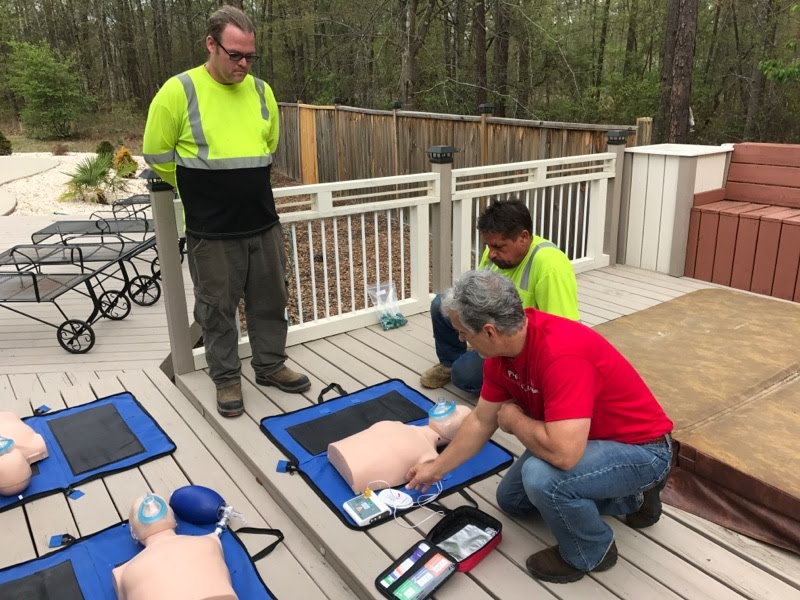
All these scenarios and more are incorporated into our live CPR classes in Martinez, GA, helping students become situationally ready.
Legal Considerations
Many bystanders hesitate to perform CPR out of fear of legal consequences. Fortunately, most states have Good Samaritan Laws that protect well-intentioned responders who act in good faith during emergencies.
Legal Protection Overview:
- You’re protected if you provide reasonable, trained assistance
- Consent is implied when the victim is unresponsive
- Use of an AED is legally supported in public settings
- You must remain at the scene until professional help arrives
We cover these topics in detail in every BLS certification course and in our Heartsaver classes for lay responders.
Professional Training & Certification
While reading this guide provides valuable knowledge, hands-on CPR training is essential to ensure you can respond effectively under pressure.
Why Certification Matters:
- Boosts your confidence in real-life emergencies
- Qualifies you for employment in healthcare, childcare, fitness, and public service
- Ensures compliance with American Heart Association guidelines
At Pulse CPR & First Aid School, our certified instructors offer a variety of programs, including:
Get started today by visiting our class schedule page or call (706) 901-7277 to book your certification class.
Complete CPR Training Guide
A Comprehensive Manual for Life-Saving Skills
Presented by Pulse CPR & First Aid School
110 Davis Road, Suite 18
Martinez, GA 30907
Phone: (706) 901-7277
Email: pulsecpr967@gmail.com
Website: www.pulsecprschool.com
Table of Contents
- Introduction to CPR
- When to Use CPR
- Adult CPR Procedure
- Child CPR (Ages 1-8)
- Infant CPR (Under 1 Year)
- Hands-Only CPR
- Using an AED
- Recovery Position
- Common Mistakes to Avoid
- Practice Scenarios
- Legal Considerations
- Professional Training & Certification
Introduction to CPR
Cardiopulmonary Resuscitation (CPR) is a life-saving emergency procedure performed when someone’s heart stops beating or they stop breathing normally. According to the American Heart Association, CPR combines chest compressions with rescue breathing to maintain blood flow and oxygen delivery to vital organs, particularly the brain, until professional medical help arrives.
Key Statistics from the American Heart Association:
- Effective CPR can double or triple survival rates from cardiac arrest
- Brain damage can occur within 4-6 minutes without oxygen
- Immediate CPR can maintain blood flow and prevent irreversible damage
- More than 350,000 out-of-hospital cardiac arrests occur annually in the United States
The Chain of Survival (American Heart Association):
- Early recognition and activation of emergency response
- Early CPR by bystanders
- Early defibrillation
- Early advanced life support
- Integrated post-cardiac arrest care
At Pulse CPR & First Aid School, we believe that everyone should have access to quality CPR training. Our mission is to empower communities with life-saving skills through comprehensive, hands-on training programs that follow American Heart Association guidelines.
When to Use CPR
CPR should be performed when a person is unconscious, unresponsive, and not breathing normally or at all. The American Heart Association emphasizes that recognizing cardiac arrest quickly is crucial for survival.
Signs that indicate CPR is needed:
- Person doesn’t respond to verbal or physical stimulation
- No normal breathing (agonal gasping doesn’t count as normal breathing)
- No signs of life or movement
- Blue or gray skin color, especially around lips and fingernails
Do NOT perform CPR if:
- The person is conscious and responsive
- The person is breathing normally
- There are obvious signs of life
- The scene is unsafe for you or the victim
Understanding when to act is as important as knowing how to act. Our CPR and First Aid classes provide hands-on training to help you recognize emergency situations and respond appropriately.
Adult CPR Procedure
The following procedure follows American Heart Association guidelines for adult CPR:
Step 1: Check Responsiveness
- Tap the person’s shoulders firmly
- Shout “Are you okay?”
- Look for response or movement
Step 2: Call for Help
- Call 911 immediately or have someone else do it
- Request an AED if available
- Put phone on speaker if you’re alone
Step 3: Position the Person
- Place person on firm, flat surface
- Tilt head back slightly by lifting chin
- Open airway by tilting head back and lifting chin
Step 4: Check for Breathing
- Look for chest movement for no more than 10 seconds
- Listen for breathing sounds
- Feel for breath on your cheek
Step 5: Hand Placement
- Place heel of one hand on center of chest between nipples
- Place other hand on top, interlacing fingers
- Keep arms straight and shoulders directly over hands
Step 6: Perform Compressions
- Push hard and fast at least 2 inches deep (but no more than 2.4 inches)
- Allow complete chest recoil between compressions
- Compress at rate of 100-120 per minute
- Count compressions out loud
Step 7: Rescue Breathing (if trained)
- After 30 compressions, tilt head back and lift chin
- Pinch nose closed
- Create seal over mouth and give 2 breaths
- Each breath should last 1 second and make chest rise
Step 8: Continue Cycles
- Repeat 30 compressions followed by 2 breaths
- Continue until emergency services arrive or person shows signs of life
- Switch with another person every 2 minutes to prevent fatigue
For comprehensive hands-on training in adult CPR techniques, consider enrolling in our BLS classes which provide healthcare provider-level training following American Heart Association standards.
Child CPR (Ages 1-8)
Child CPR follows similar principles to adult CPR but with modifications for smaller body size, as outlined by the American Heart Association pediatric guidelines:
Key Differences:
- Use one or two hands for compressions (depending on child’s size)
- Compress at least 1/3 the depth of chest (about 2 inches)
- Same compression rate: 100-120 per minute
- Same ratio: 30 compressions to 2 breaths
Hand Placement:
- Use heel of one hand for small children
- Use both hands for larger children
- Place on lower half of breastbone, between nipples
Rescue Breathing:
- Create gentle seal over child’s mouth
- Give smaller, gentler breaths
- Watch for chest to rise with each breath
Special Considerations:
- Children’s airways are smaller and more easily obstructed
- Compressions should be forceful but appropriate for body size
- Recovery is often faster in children when CPR is performed correctly
Learn more about pediatric emergency care in our specialized training classes designed for parents, teachers, and childcare providers.
Infant CPR (Under 1 Year)
Infant CPR requires special techniques due to the fragile nature of infant anatomy. The American Heart Association provides specific guidelines for infant resuscitation:
Positioning:
- Hold infant face-up along your forearm
- Support head and neck with your hand
- Keep head lower than chest
Compressions:
- Use two fingers (index and middle) on center of chest
- Compress at least 1/3 depth of chest (about 1.5 inches)
- Rate of 100-120 compressions per minute
- Allow complete recoil between compressions
Rescue Breathing:
- Cover infant’s mouth AND nose with your mouth
- Give gentle puffs of air
- Watch for chest to rise slightly
Cycles:
- 30 compressions followed by 2 breaths
- Continue until help arrives or infant responds
Important Notes:
- Infant bones are more flexible but also more fragile
- Overventilation can cause gastric distension
- Infant cardiac arrest is often respiratory in origin
For detailed infant CPR training, explore our comprehensive CPR courses that include infant and child resuscitation techniques.
Hands-Only CPR
The American Heart Association strongly advocates for Hands-Only CPR as an effective method for untrained bystanders:
When to Use:
- If you’re not trained in rescue breathing
- Concern about disease transmission
- Teen or adult victim of sudden cardiac arrest
- In public settings where rescue breathing may not be practical
Technique:
- Call 911
- Push hard and fast in center of chest
- Compress at least 2 inches deep
- Rate of 100-120 compressions per minute
- Allow complete recoil between compressions
- Continue until help arrives
Helpful Rhythm:
- “Stayin’ Alive” by the Bee Gees (103 BPM)
- “Another One Bites the Dust” by Queen (110 BPM)
Research Support:
Studies show that Hands-Only CPR can be as effective as conventional CPR for adult cardiac arrest victims in the first few minutes after collapse.
At Pulse CPR & First Aid School, we offer training programs for all skill levels. Whether you’re a complete beginner or need recertification, visit our classes page to find the right training for you.
Using an AED
Automated External Defibrillators (AEDs) are designed for use by non-medical personnel and significantly improve survival rates when used with CPR. The American Heart Association emphasizes early defibrillation as a critical link in the chain of survival:
Steps:
- Turn on AED – Follow voice prompts
- Attach pads – Place as shown on diagrams
- Analyze – Ensure no one is touching victim
- Shock if advised – Press shock button when prompted
- Resume CPR – Continue compressions immediately after shock
Pad Placement:
- Adult: One pad upper right chest, one pad lower left side
- Child: Front and back placement may be needed for small children
- Infant: Use pediatric pads if available
Safety:
- Ensure no one is touching the victim during analysis or shock
- Remove from water if victim is wet
- Remove medication patches from chest area
- Dry chest if wet
AED Maintenance:
- Check battery and pad expiration dates regularly
- Perform routine maintenance checks
- Replace components as recommended by manufacturer
Our BLS certification classes include comprehensive AED training that meets American Heart Association standards for healthcare providers.
Recovery Position
If a person is breathing but unconscious, the recovery position helps maintain an open airway and prevents choking:
Steps:
- Kneel beside person
- Place arm nearest you at right angle to body
- Bring far arm across chest, hand against near cheek
- Lift far knee and pull person toward you
- Tilt head back to keep airway open
- Monitor breathing continuously
When to Use:
- Person is unconscious but breathing normally
- After successful CPR when person starts breathing
- To prevent choking on vomit or fluids
Monitoring:
- Continue to assess breathing and pulse
- Be prepared to resume CPR if breathing stops
- Keep person warm and comfortable
This technique is covered in detail in our first aid training programs along with other emergency response skills.
Common Mistakes to Avoid
Understanding common CPR mistakes can improve your effectiveness during an emergency. The American Heart Association identifies these frequent errors:
Compression Errors:
- Too shallow: Must compress at least 2 inches for adults
- Too slow: Maintain 100-120 compressions per minute
- Incomplete recoil: Allow chest to return to normal position
- Wrong hand placement: Center of chest, between nipples
- Leaning: Don’t lean on chest between compressions
Rescue Breathing Errors:
- Tilting head too far back or not enough
- Not creating proper seal
- Breathing too hard or too long
- Not watching for chest rise
- Excessive ventilation
General Mistakes:
- Stopping compressions too often
- Not calling 911 immediately
- Giving up too quickly
- Positioning victim incorrectly
- Interrupting compressions for pulse checks
Quality Improvement:
- Focus on continuous, high-quality compressions
- Minimize interruptions
- Rotate rescuers every 2 minutes
- Use feedback devices when available
Proper technique can only be mastered through hands-on practice. Our certified instructors provide personalized feedback to help you avoid these common mistakes.
Practice Scenarios
Real-world application of CPR skills requires practice with various scenarios. Here are examples we use in our training:
Scenario 1: Adult Collapse in Public
You’re at a restaurant when someone at the next table suddenly collapses:
- Assess scene safety
- Check responsiveness
- Call 911 and request AED
- Check breathing
- Begin CPR if needed
- Continue until help arrives
Scenario 2: Child Pool Emergency
A child is pulled from a swimming pool, unconscious and not breathing:
- Ensure scene safety
- Call 911 immediately
- Check for breathing
- Begin child CPR
- Continue cycles of 30:2
- Be prepared to turn child to side if vomiting occurs
Scenario 3: Infant Emergency
An infant becomes unresponsive during feeding:
- Check responsiveness by tapping feet
- Call 911
- Check breathing
- Position for infant CPR
- Use two-finger compressions
- Gentle rescue breathing covering mouth and nose
Scenario 4: Workplace Emergency
A coworker collapses at work:
- Ensure scene safety
- Activate emergency response system
- Check for responsiveness and breathing
- Locate workplace AED
- Begin CPR
- Continue until professional help arrives
These scenarios and many others are practiced in our group training programs designed for businesses and organizations.
Legal Considerations
Understanding the legal aspects of providing emergency care is important for potential rescuers:
Good Samaritan Laws:
- Protect people who provide emergency aid in good faith
- Vary by state and jurisdiction
- Generally protect from liability when acting reasonably
- Don’t protect against gross negligence or reckless behavior
Consent:
- Conscious person: Must give consent before helping
- Unconscious person: Implied consent in emergency situations
- Children: Parents/guardians provide consent, but implied in emergency
Duty to Act:
- Most people: No legal duty to provide CPR
- Certain professionals: May have legal duty (lifeguards, healthcare workers)
- Once you start: Should continue until relieved by professionals
Documentation:
- Note time and actions taken
- Provide information to arriving professionals
- May be asked for statement later
Training Protection:
- Proper training provides legal protection
- Certification demonstrates competency
- Follow established protocols and guidelines
Our instructors discuss legal considerations as part of all our training programs, ensuring you understand your rights and responsibilities.
Professional Training & Certification
While this guide provides valuable information, hands-on training and certification are essential for competent CPR performance. Pulse CPR & First Aid School offers comprehensive training programs that meet American Heart Association standards:
Our Training Programs:
Basic Life Support (BLS) for Healthcare Providers
- Designed for healthcare professionals
- Includes adult, child, and infant CPR
- AED training and team-based resuscitation
- Two-year certification
Heartsaver CPR/AED for General Public
- Perfect for non-healthcare providers
- Adult and child CPR techniques
- AED operation and maintenance
- Two-year certification
Comprehensive First Aid Training
- CPR combined with first aid skills
- Wound care and emergency response
- Choking relief and medical emergencies
- Ideal for teachers, coaches, and parents
Specialized Services:
- On-site training for businesses
- Customized programs for specific industries
- Flexible scheduling for large groups
- American Heart Association certification
- Schools and educational institutions
- Community centers and organizations
- Special events and health fairs
- Accessible training for all populations
Why Choose Pulse CPR & First Aid School:
- Experienced Instructors: Our team includes certified professionals with real-world emergency experience
- Small Class Sizes: Personal attention and hands-on practice
- Flexible Scheduling: Evening and weekend classes available
- Convenient Location: Easily accessible in Martinez, GA
- Competitive Pricing: Quality training at affordable rates
Read what our students say about their training experience with us.
Certification Requirements:
- Hands-on Skills Testing: Demonstrate proper technique
- Written Examination: Knowledge of emergency procedures
- Attendance: Complete all required training hours
- Continuing Education: Regular recertification required
Recertification:
- Most certifications valid for 2 years
- Skills can deteriorate without practice
- We offer convenient recertification classes
- Online options available for some components
Contact us today to schedule your training or learn more about our programs.
Career Opportunities:
Interested in becoming a CPR instructor? We offer instructor training programs for qualified candidates who want to make a difference in their communities.
Additional Resources
American Heart Association Resources:
Educational Materials:
- Our Training Blog – Regular updates on CPR techniques and emergency preparedness
- Practice videos and demonstrations
- Emergency action plan templates
- First aid quick reference guides
Emergency Preparedness:
- Home emergency kits
- Workplace safety planning
- Community response programs
- Disaster preparedness training
Contact Information
Pulse CPR & First Aid School
110 Davis Road, Suite 18
Martinez, GA 30907
Phone: (706) 901-7277
Email: pulsecpr967@gmail.com
Website: www.pulsecprschool.com
Office Hours:
- Monday – Friday: 9:00 AM – 6:00 PM
- Saturday: 10:00 AM – 4:00 PM
- Sunday: By appointment
Emergency Training Available:
- Weekday classes
- Weekend sessions
- Evening programs
- On-site group training
Schedule your training today or call us to discuss your specific needs.
Key Reminders
Remember: Something is better than nothing. Even imperfect CPR is better than no CPR.
Quality over quantity: Focus on good compressions rather than perfect rescue breathing.
Don’t give up: Continue CPR until professional help arrives, even if it seems like a long time.
Stay calm: Your confidence and calmness can help in the emergency situation.
Practice regularly: Skills fade without practice, so refresh your training periodically.
Get certified: Formal training provides confidence and legal protection.
Final Notes
This comprehensive guide provides essential information about CPR techniques based on current American Heart Association guidelines. However, it is not a substitute for hands-on training and certification. CPR is a physical skill that requires practice with proper equipment and instructor feedback.
Seek professional CPR training from certified instructors who can:
- Demonstrate proper technique
- Provide hands-on practice with manikins
- Correct your form and technique
- Simulate realistic emergency scenarios
- Issue official American Heart Association certification
At Pulse CPR & First Aid School, we’re committed to providing the highest quality training to help you develop life-saving skills. Our experienced instructors, state-of-the-art equipment, and comprehensive curriculum ensure you’re prepared to respond effectively in emergency situations.
Remember: The skills you learn today could save a life tomorrow. The life you save might be someone you love.
Take action today: Visit our website to schedule your CPR training and join thousands of others who have learned life-saving skills through our programs.
Acknowledgments
This guide is produced by Pulse CPR & First Aid School in accordance with American Heart Association guidelines and standards. We are grateful to the American Heart Association for their continued research and development of evidence-based resuscitation techniques that save lives worldwide.
References:
- American Heart Association CPR & Emergency Cardiovascular Care Guidelines
- American Heart Association Basic Life Support Provider Manual
- American Heart Association Heartsaver CPR AED Student Workbook
- Circulation Journal – American Heart Association Scientific Statements
This guide is for educational purposes only and should not replace professional medical advice or formal CPR training. Always seek hands-on training from certified instructors and follow local emergency procedures.
© 2025 Pulse CPR & First Aid School. All rights reserved.
For the most current information and to schedule training, visit www.pulsecprschool.com or call (706) 901-7277.