
The Shocking Truth: How Power-Packed is an AED Compared to a 9-Volt Battery?
We have all done it—or at least thought about it. Testing a standard 9-volt grocery store battery by touching it to your tongue results in a sharp, metallic tingle. It is a classic micro-demonstration of electrical current passing through tissue.
But if you are stepping up to save a life using an Automated External Defibrillator (AED), you are dealing with a completely different league of electrical power.
If you have ever wondered exactly how many times greater an AED shock is compared to that 9-volt battery on your tongue, the answer is staggering: An AED shock is roughly 80,000 to 100,000 times greater in total energy.
Understanding this immense power highlights just how crucial professional training is. Whether you are a healthcare professional or a dedicated bystander, knowing how to safely manage this life-saving force is vital. (Enrolling in professional training doesn’t have to break the bank, either—healthcare providers can take advantage of our current Limited-Time $59 BLS Certification Special at Pulse CPR School to get certified today!)
Let’s break down the fascinating science of electrical defibrillation, how modern life-saving technology protects the human body, and why getting certified with hands-on training is so critical.
Breaking Down the Math: AED vs. 9-Volt Battery
To truly grasp the immense power of an AED, we have to look at how electricity is measured. When dealing with human tissue and medical devices, scientists look at two primary metrics: Voltage (the pressure pushing the current) and Joules (the actual total energy delivered over time).
The 9-Volt Battery Sensation
When you press a 9-volt battery to your moist tongue, the nominal 9 volts of pressure pushes a tiny current of about 1 to 4 milliamps through a localized patch of saliva. Because it happens for just a brief moment, the total energy transfer equals a mere fraction of a single thousandth of a joule—roughly 0.002 to 0.003 joules. It is entirely harmless and serves only as a mild sensory wake-up call.
The Life-Saving AED Jolt
An AED, on the other hand, is engineered to do something extraordinary: it must pass an electrical current cleanly through the chest wall, cut through the physical resistance of skin, fat, and bone, and completely depolarize (stun) a chaotic, quivering heart muscle.
- Internal Voltage: An AED internally builds up anywhere from 1,000 to 5,000 volts to drive the current.
- Energy Delivered: A standard AED shock delivers between 120 and 360 joules of pure energy directly to the victim’s chest in a fraction of a second.
When you divide 200 joules by 0.002 joules, you realize the life-saving device hanging on your office wall packs nearly 100,000 times the raw energy of that household battery. Managing this massive energy transfer safely requires proper technique, which is exactly what you will master during our hands-on skills practice. (If you need your credentials fast, don’t miss our $59 AHA BLS Provider Class Special available this week at our Martinez facility!)
The Magic of Biphasic Waveforms: Power with Precision
With that much raw power traveling through the human torso, you might wonder: How does an AED save a heart without causing massive internal damage?
The secret lies in modern engineering. Older hospital crash carts used a “monophasic” waveform, meaning a massive, one-way torrent of electricity (up to 360 joules) flooded the body.
Today’s modern devices utilize biphasic waveforms. Here is how this intelligent technology works:
- The Two-Way Street: When an AED discharges, the current flows from Pad A to Pad B for the first half of the shock, and then instantly reverses direction, flowing from Pad B to Pad A for the second half.
- Cellular Reset: The first phase charges and prepares the cardiac cell membranes, while the second phase captures any remaining quivering cells. This dual-action approach resets the heart’s natural pacemaker (the SA node) far more efficiently.
- Lower Energy, Safer Outcomes: Because biphasic current is so effective, modern AEDs only need 120 to 200 joules to achieve the exact same resuscitation success as older 360-joule machines. This drastically minimizes post-shock heart weakness and skin irritation.
- Smart Body Customization: Modern AEDs use advanced impedance compensation. When you place the pads, the device sends a microscopic test signal to read the victim’s chest density. It then customizes the shock duration on the fly—providing a shorter pulse for a smaller frame and a tailored wave for a larger person.
Learning how to properly position these pads and analyze waveforms is a core element of high-quality life support. Professionals looking for a comprehensive refresher can claim our $59 local BLS training special to practice with industry-leading automated simulators.
Why Hands-On AED and CPR Training Matters
An AED is an incredibly powerful medical tool, but it is built to be entirely safe for bystanders to use. Modern AEDs are fully automated; they will never deliver a shock unless they scan the patient’s heart and detect a specific, shockable rhythm like ventricular fibrillation (VF) or pulseless ventricular tachycardia (VT).
Even though the machine does the heavy lifting, speed and confidence are everything. Every single minute that passes without CPR and defibrillation reduces a sudden cardiac arrest victim’s chance of survival by 7% to 10%.
That is why hands-on practice with realistic training equipment is irreplaceable. Building physical muscle memory using simulated AEDs and real-time feedback mannequins bridges the gap between fear and life-saving action.
Master the Life-Saving Skills at Pulse CPR and First Aid School
Whether you are a medical professional needing a license renewal, a local teacher, a fitness instructor, or a parent wanting to keep your household safe, Pulse CPR and First Aid School is here to empower you.
As the premier American Heart Association (AHA) Training Site serving the Central Savannah River Area (CSRA), we have proudly trained over 20,000 students with a perfect 5-star reputation built on engagement, clarity, and real-world expertise. Led by healthcare and nursing professionals with over 20 years of field experience, we ensure you leave our classroom feeling fully confident.
Our Featured AHA Course Offerings:
- AHA BLS Provider Classes ($59 Limited Special): Fast, efficient Basic Life Support certifications tailored for doctors, nurses, EMTs, dental professionals, and nursing students. Lock in our promotional $59 rate today and save off the standard price!
- Heartsaver CPR / AED & First Aid: Comprehensive compliance training perfect for coaches, teachers, industrial workers, and everyday heroes.
- Infant CPR & Baby Sitter Bootcamp®: Specialized safety, first aid, and business training designed specifically for teens ages 10–18.
- Onsite Corporate Training: We bring the classroom to your business! We provide site-specific corporate training, record keeping, and compliance auditing for groups across Georgia, South Carolina, and beyond.
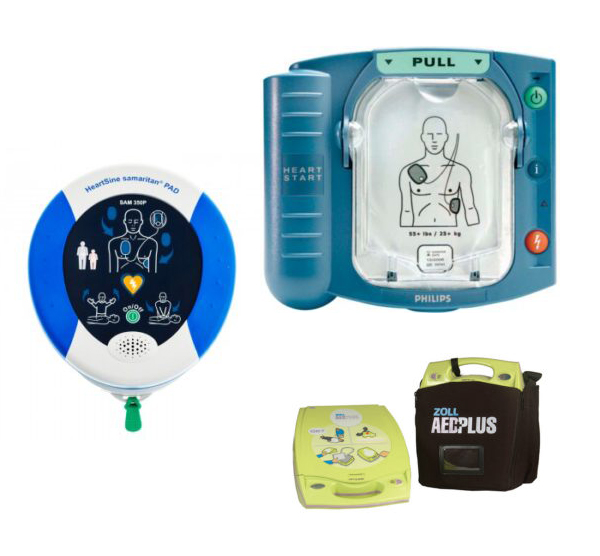
- Authorized AED Sales: Looking to protect your facility? We carry trusted life-saving hardware including the Heartsine Samaritan PAD, Zoll AED Plus, and Philips HeartStart AED.
Get Certified Today—Receive Your Card Tonight!
Don’t wait until your employer demands your card or an emergency strikes to wish you knew what to do. Our local training facility is strategically located for easy travel throughout the greater Augusta metro area. We offer small class sizes, cutting-edge practice mannequins that replicate real-world resistance, and same-day physical credentials sent straight to your email.
Take advantage of our $59 BLS Training Discount before it expires!
- 📍 Visit Our Classroom: 110 Davis Road Suite #18, Martinez, GA 30907
- 📞 Call Us Directly: 706-901-7277
- 📧 Email Inquiries: pulsecpr967@gmail.com
- 🌐 Register Online: Pulse CPR School Website
Know CPR. Make a difference. Save a life.