
Learn How to Get Certified in BLS Across Augusta and Nearby Areas
Are you a healthcare professional or someone working in a medical setting in Augusta, Martinez, Evans, Grovetown, Aiken, North Augusta, Harlem, Hepzibah, Appling, or anywhere in the Central Savannah River Area (CSRA)? If so, Basic Life Support (BLS) certification is likely a requirement for your profession. This comprehensive guide will help you understand everything about BLS certification, from who needs it to how to pass your exam on the first try.
What is BLS Certification?
Basic Life Support (BLS) certification, provided by the American Heart Association (AHA), is an essential credential for healthcare providers and first responders throughout Georgia and South Carolina. BLS training teaches critical life-saving skills including high-quality CPR for adults, children, and infants, use of automated external defibrillators (AEDs), and relief of choking in responsive victims.
The BLS course is specifically designed for healthcare professionals who need to know how to perform CPR and other basic cardiovascular life support skills in a wide variety of in-facility and prehospital settings.
Who Needs BLS Certification in Augusta, Martinez, and the CSRA?
BLS certification is required for numerous healthcare professionals working in hospitals, clinics, and medical facilities throughout the Augusta-Richmond County area and surrounding communities. Here are the primary professionals who need BLS certification:
Healthcare Professionals
- Nurses (RN, LPN) working at AU Medical Center, Doctor’s Hospital, University Hospital, or other CSRA healthcare facilities
- Medical assistants in clinics throughout Martinez, Evans, and Grovetown
- Paramedics and EMTs serving Augusta-Richmond County EMS and surrounding areas
- Respiratory therapists working in hospitals across the CSRA region
- Physical and occupational therapists in Aiken, North Augusta, and surrounding areas
- Dental professionals including dentists and dental hygienists
- Pharmacists working in hospital and retail settings
- Medical students attending Augusta University Medical College of Georgia
Other Professionals
- Childcare workers and teachers in Richmond County, Columbia County, and Aiken County school systems
- Personal trainers and fitness instructors at gyms throughout the CSRA
- Security personnel working at medical facilities
- Lifeguards at pools and recreational facilities in Augusta, Martinez, and Evans
Understanding the BLS Course Content
The AHA BLS course covers essential life-saving techniques that every healthcare provider should master. Here’s what you’ll learn:
Core Skills Covered
- High-Quality CPR for adults, children, and infants
- AED operation and troubleshooting
- Bag-mask ventilation techniques
- Choking relief for responsive victims
- Team-based resuscitation scenarios
- Recovery position placement
- Recognition of cardiac arrest and respiratory arrest
Course Components
- Online learning modules (if taking blended course)
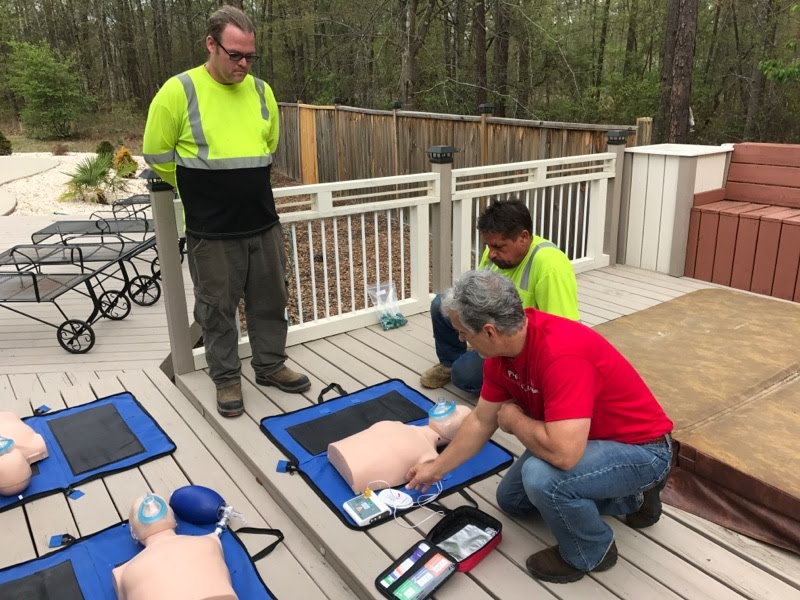
- Hands-on skills practice with manikins
- Written examination with scenario-based questions
- Skills demonstration and evaluation
- Team-based scenarios practicing effective communication
Sample BLS Exam Questions
To help you prepare for your BLS certification exam, here are examples of the types of questions you might encounter:
Multiple Choice Questions
Question 1: What is the correct compression-to-ventilation ratio for single-rescuer adult CPR? A) 15:2 B) 30:2 C) 15:1 D) 30:1
Question 2: When performing chest compressions on an adult, how deep should you compress? A) At least 1 inch B) At least 1.5 inches C) At least 2 inches D) At least 2.5 inches
Question 3: What is the recommended compression rate for CPR? A) 80-100 compressions per minute B) 100-120 compressions per minute C) 120-140 compressions per minute D) 60-80 compressions per minute
Scenario-Based Questions
Scenario: You arrive at a patient’s room and find them unresponsive on the floor. What is your first action? A) Begin chest compressions immediately B) Check for responsiveness and breathing C) Call for help D) Position the patient
Answers and Explanations
- Answer: B (30:2) – The AHA recommends 30 compressions to 2 breaths for single-rescuer adult CPR
- Answer: C (At least 2 inches) – Adult chest compressions should be at least 2 inches deep but no more than 2.4 inches
- Answer: B (100-120 compressions per minute) – This rate ensures adequate blood flow while allowing complete chest recoil
Key Areas to Study for Your BLS Exam
1. CPR Techniques
- Hand placement for different age groups
- Compression depth and rate specifications
- Complete chest recoil importance
- Minimizing interruptions during compressions
2. AED Operations
- Safety precautions before shocking
- Proper pad placement for adults and children
- When NOT to use an AED
- Maintenance and troubleshooting
3. Team Dynamics
- Clear communication during resuscitation
- Role assignments and leadership
- Closed-loop communication techniques
- Constructive feedback during scenarios
4. Special Considerations
- Pregnant patients positioning and modifications
- Drowning victims specific protocols
- Choking relief techniques for different ages
- Two-rescuer CPR coordination
How to Prepare for Your BLS Exam
Study Resources
Before attending your BLS class in Augusta, Martinez, Evans, or surrounding CSRA areas, take advantage of these preparation resources:
- Take our comprehensive BLS practice test – Free BLS Practice Test 2025 with updated AHA questions specific to Martinez, GA area
- Review our detailed study guide – BLS Study Guide and Quiz Questions covering all exam topics
- Learn exam strategies – How to Pass the BLS Exam on Your First Try
- Additional practice questions – BLS Sample Test with Free Practice Questions
Study Tips
- Review AHA guidelines regularly, as they’re updated every 5 years
- Practice hands-on skills with friends or colleagues
- Time yourself during practice scenarios
- Focus on weak areas identified through practice tests
- Understand the “why” behind each technique, not just memorize steps
What to Expect During Your BLS Certification Class
Class Structure
Most BLS classes in the Augusta-CSRA area follow this format:
- 2-4 hours of instruction (varies by provider)
- Interactive learning with instructor-led demonstrations
- Hands-on practice with CPR manikins and AED trainers
- Skills testing with immediate feedback
- Written exam (usually 25 questions, need 84% to pass)
What to Bring
- Photo identification (driver’s license or state ID)
- Comfortable clothing that allows you to kneel and move freely
- Notebook and pen for taking notes
- Any required paperwork from your employer
BLS Renewal Requirements
BLS certification is valid for 2 years from the date of completion. Healthcare professionals working in Augusta, Martinez, Evans, Grovetown, Aiken, North Augusta, Harlem, Hepzibah, Appling, and throughout the CSRA should plan for renewal approximately 1-2 months before expiration.
Renewal Options
- Traditional renewal class (2-3 hours)
- Online renewal with skills check-off
- HeartCode BLS blended learning option
Finding BLS Classes in Your Area
Augusta-Richmond County
Multiple providers offer BLS certification classes throughout Augusta, including hospital-based training centers and independent providers.
Martinez & Evans
Located in Columbia County, both Martinez and Evans have convenient access to BLS training, with classes offered regularly to serve the growing healthcare workforce.
Grovetown & Harlem
These Columbia County communities have increasing demand for BLS certification as the area continues to grow and attract healthcare professionals.
Aiken County & North Augusta
South Carolina healthcare providers in Aiken and North Augusta can find BLS classes that meet AHA standards and are recognized across state lines.
Hepzibah & Appling
These Richmond County communities are served by Augusta-area BLS providers, ensuring convenient access for local healthcare workers.
Frequently Asked Questions About BLS
Q: How long does BLS certification last?
A: BLS certification is valid for 2 years from the completion date.
Q: Can I take BLS online?
A: The AHA offers HeartCode BLS, which includes online learning followed by hands-on skills practice with an instructor.
Q: What’s the difference between BLS and CPR?
A: BLS is specifically designed for healthcare providers and includes advanced techniques, while basic CPR courses are for laypersons.
Q: Do I need BLS if I already have ACLS?
A: Yes, BLS is typically a prerequisite for ACLS and must be maintained separately.
Q: How much does BLS certification cost?
A: Costs vary by provider but typically range from $50-100 in the CSRA area.
Conclusion: Your Path to BLS Success
Whether you’re a healthcare professional in Augusta working at AU Medical Center, a nurse in Martinez, an EMT in Evans, or a medical assistant in Grovetown, BLS certification is a critical credential that could help you save lives. The key to success is thorough preparation using quality study materials and practice tests.
Start your preparation today by taking our free BLS practice test designed specifically for the CSRA area. Our comprehensive study resources will help ensure you pass your BLS exam on the first try, whether you’re taking it in Augusta, Martinez, Evans, Grovetown, Aiken, North Augusta, or anywhere else in the Central Savannah River Area.
Remember, BLS certification isn’t just about passing an exam – it’s about being prepared to provide life-saving care when it matters most. Take the time to study, practice your skills, and approach your certification with confidence.
Ready to get started? Visit our comprehensive BLS practice test and begin your journey toward BLS certification success today.
This guide serves healthcare professionals throughout the Central Savannah River Area (CSRA), including Augusta, Martinez, Evans, Grovetown, Aiken, North Augusta, Harlem, Hepzibah, Appling, and surrounding communities in Georgia and South Carolina. All information is based on current American Heart Association BLS guidelines and requirements.