
How to Pass the BLS Exam on Your First Try: Complete Study Guide 2024-2025
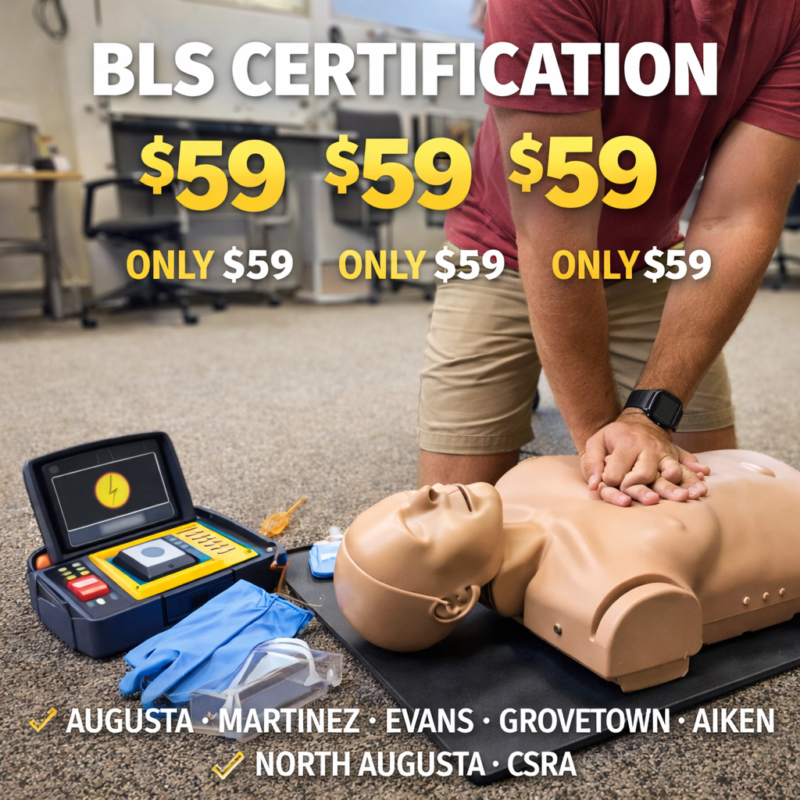
Sponsored by Pulse CPR and First Aid School – Martinez, GA | Call (706) 901-7277
Passing the Basic Life Support (BLS) exam from the American Heart Association (AHA) doesn’t have to be stressful. With proper preparation and the right study approach, you can confidently earn your BLS certification on your first attempt. This comprehensive guide provides everything you need to know to succeed, backed by the latest 2024-2025 AHA guidelines.
Understanding the BLS Exam: What You Need to Know
The AHA BLS exam consists of two main components: a written examination and a hands-on skills assessment. A passing grade is 80% or higher for most certification providers, though some require only 70% or higher. The good news? If you don’t pass on your first attempt, don’t worry—unlimited retakes are available.
Why BLS Certification Matters
Basic Life Support certification is essential for healthcare professionals, first responders, and anyone who wants to be prepared for emergency situations. The skills you learn could literally save lives in critical moments when every second counts. Whether you need certification for work or want to be prepared for emergencies in your community, BLS classes provide the foundation for life-saving skills.
Pre-Course Preparation: Setting Yourself Up for Success
Study the Latest AHA Guidelines
Before attending your BLS course, familiarize yourself with the current American Heart Association BLS guidelines. The AHA regularly updates their protocols based on the latest scientific evidence, so ensure you’re studying the most current information. If you’re also interested in comprehensive emergency preparedness, consider our First Aid CPR classes that combine multiple life-saving skills.
Key areas to focus on include:
- Compression Rate: 100-120 compressions per minute
- Compression Depth: At least 2 inches (5 cm) for adults, approximately 2 inches for children, and about 1.5 inches (4 cm) for infants
- Compression-to-Ventilation Ratios: 30:2 for single rescuer scenarios, 15:2 for two-rescuer infant and child CPR
- Hand Placement: Center of chest on lower half of breastbone for adults and children, two fingers just below nipple line for infants
Take Practice Tests
One of the most effective ways to prepare is by taking multiple practice tests. Getting ready to take a Basic Life Support Certification Exam? Take our free BLS practice test and see how you score. For comprehensive study materials, check out our complete BLS exam study guide with detailed explanations and tips.
Recommended Practice Test Schedule:
- Week 1: Take your first practice test to identify knowledge gaps
- Week 2: Focus on studying weak areas, then retake practice tests
- Week 3: Take final practice tests until consistently scoring 85% or higher
Mastering the Written Exam Component
Core Knowledge Areas
1. Chain of Survival Understand the adult and pediatric chains of survival, including:
- Early recognition and activation of emergency response
- Early CPR with emphasis on chest compressions
- Rapid defibrillation
- Effective advanced life support
- Integrated post-cardiac arrest care
2. Scene Safety and Assessment Always remember that scene safety comes first. You cannot help others if you become a victim yourself. Learn to quickly assess:
- Environmental hazards
- Responsiveness of the victim
- Breathing and pulse checks
- When to call for help
3. High-Quality CPR Components
- Push hard and fast on the center of the chest
- Allow complete chest recoil between compressions
- Minimize interruptions in compressions
- Avoid excessive ventilation
- Rotate compressors every 2 minutes to prevent fatigue
4. AED Operation Understand proper Automated External Defibrillator use:
- When to use an AED
- Proper pad placement for adults, children, and infants
- Safety precautions during shock delivery
- Special considerations (wet victims, implanted devices, medication patches)
Note: If your organization needs AED equipment, we also provide AED sales and consultation services to ensure you have the right equipment for your facility.
Study Strategies That Work
Active Learning Techniques:
- Create flashcards for key terms and procedures
- Draw diagrams of proper hand placement and compression techniques
- Teach the concepts to someone else
- Use mnemonics to remember sequences (like “CAB” – Compressions, Airway, Breathing)
Time Management:
- Study in 25-minute focused sessions with 5-minute breaks
- Review material multiple times rather than cramming
- Focus on understanding concepts, not just memorizing facts
Excelling at the Skills Assessment
The hands-on portion often challenges students more than the written exam. Here’s how to master the practical skills:
Adult CPR Skills
Proper Body Mechanics:
- Position yourself beside the victim’s chest
- Place the heel of one hand on the center of the chest between the nipples
- Place your other hand on top, interlacing fingers
- Keep arms straight and shoulders directly over your hands
- Use your body weight, not just arm strength
Compression Technique:
- Push hard and fast, allowing complete chest recoil
- Count aloud to maintain proper rate
- Switch with partner every 2 minutes or 5 cycles of 30:2
Pediatric Considerations
Child CPR (1 year to puberty):
- Use one or two hands depending on child’s size
- Compress at least one-third the depth of the chest
- Use 15:2 ratio for two-rescuer scenarios
Infant CPR (under 1 year):
- Use two fingers or two thumbs (two-rescuer technique)
- Compress just below the nipple line
- Be gentler but still effective
AED Skills Demonstration
Practice these steps until they become automatic:
- Turn on the AED and follow voice prompts
- Attach pads correctly (check diagrams on pads)
- Ensure no one is touching the victim during analysis and shock
- Resume CPR immediately after shock delivery
- Continue until EMS takes over or victim becomes responsive
Team-Based Scenarios
Many BLS exams include team-based resuscitation scenarios. Key points:
- Communicate clearly with team members
- Assign roles quickly (compressor, ventilator, AED operator)
- Switch roles efficiently to prevent fatigue
- Stay calm and focused under pressure
Test Day Success Strategies
Physical Preparation
- Get adequate sleep the night before (7-8 hours)
- Eat a light, nutritious meal before the exam
- Arrive early to reduce stress and familiarize yourself with the testing environment
- Wear comfortable clothing that allows free movement
Mental Preparation
- Review key concepts one final time, but avoid cramming
- Practice deep breathing exercises to manage anxiety
- Visualize yourself successfully performing each skill
- Remember that instructors want you to succeed
During the Exam
Written Test Tips:
- Read each question carefully, looking for key words
- Eliminate obviously wrong answers first
- Don’t second-guess yourself if you’ve studied properly
- Manage your time effectively
Skills Test Tips:
- Listen carefully to all instructions before beginning
- Ask for clarification if anything is unclear
- Take your time – accuracy is more important than speed
- If you make a mistake, stay calm and continue
- Communicate your actions clearly to the evaluator
Common Mistakes to Avoid
Written Exam Pitfalls
- Confusing adult vs. pediatric protocols – Pay attention to age ranges in questions
- Misremembering compression ratios – 30:2 is standard for single rescuer, 15:2 for two-rescuer pediatric
- Overlooking scene safety – Always ensure safety first in any scenario
- Rushing through questions – Take time to read each question completely
Skills Assessment Errors
- Incorrect hand placement – Practice until proper positioning is automatic
- Inadequate compression depth – Push hard enough to compress at least 2 inches for adults
- Not allowing complete chest recoil – Let the chest come back up completely between compressions
- Forgetting to check for responsiveness – Always assess the victim first
- Poor communication – Clearly state your actions during team scenarios
Advanced Study Resources
Official AHA Materials
The American Heart Association provides official study materials and guidelines. These are your primary resources for the most accurate, up-to-date information.
Online Practice Platforms
Specifically designed for 2024, our BLS practice test covers all important topics, from identifying emergencies to performing effective chest compressions, rescue breaths, and using an AED correctly. Look for practice tests that follow the latest guidelines from the AHA, Red Cross, ASHI, ECC, and OSHA.
Mobile Apps and Flashcards
Download reputable BLS study apps that offer:
- Interactive scenarios
- Timed practice tests
- Video demonstrations
- Progress tracking
Special Considerations for Different Learners
Visual Learners
- Watch video demonstrations multiple times
- Use colorful charts and diagrams
- Create visual memory aids
- Practice in front of a mirror to see your technique
Auditory Learners
- Listen to BLS podcasts or audio materials
- Study with a partner and discuss concepts aloud
- Use verbal mnemonics and rhymes
- Record yourself explaining key concepts
Kinesthetic Learners
- Practice hands-on skills as much as possible
- Use a CPR manikin for home practice if available
- Attend extra practice sessions
- Take detailed notes while studying
Post-Certification: Maintaining Your Skills
Continuing Education
BLS certification typically lasts two years, but skills can deteriorate without practice. Consider:
- Regular refresher courses
- Practicing with colleagues or family members
- Staying updated on guideline changes
- Taking advanced courses like ACLS or PALS
Real-World Application
Remember that your BLS skills may be needed in various settings:
- Healthcare facilities
- Community emergencies
- Family situations
- Workplace incidents
Stay prepared by mentally rehearsing scenarios and keeping your certification current.
Why Choose Pulse CPR and First Aid School?
Located in Martinez, GA, Pulse CPR and First Aid School offers comprehensive BLS training designed to help students pass their certification exam on the first try. We serve communities throughout Georgia and provide flexible training options for individuals and organizations. Our experienced instructors provide:
- Small class sizes for personalized attention
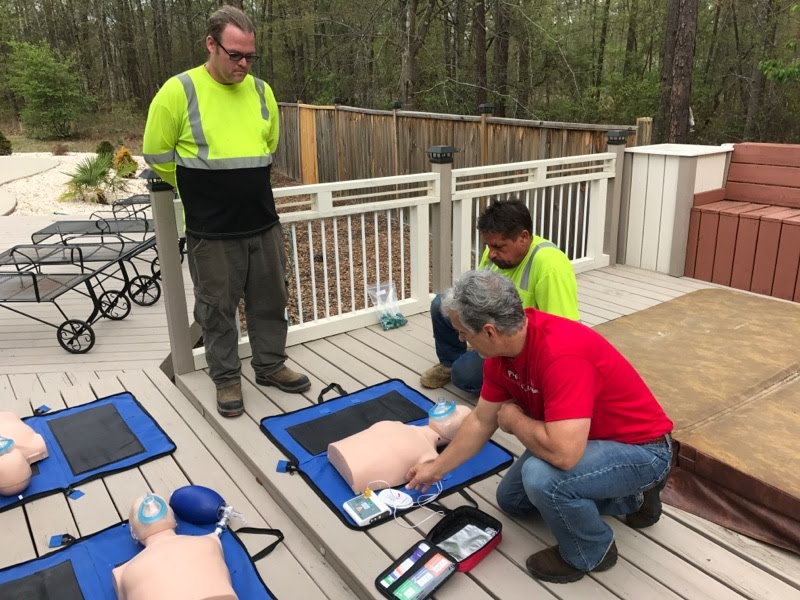
- Extensive hands-on practice time
- Up-to-date equipment and training materials
- Flexible scheduling options
- Supportive learning environment
Ready to get certified? Call us at (706) 901-7277 or visit our website to view all available classes and find the perfect training option for your needs. For businesses and organizations, we also offer group training programs that can be customized to your specific requirements.
Looking for a rewarding career opportunity? We’re always seeking qualified professionals to join our team. Check out our CPR instructor job opportunities and become part of an organization dedicated to saving lives through education.
Final Exam Preparation Checklist
Two weeks before your exam:
- [ ] Complete at least 3 full-length practice tests
- [ ] Review all AHA guideline updates
- [ ] Practice CPR skills for 30 minutes daily
- [ ] Study pediatric vs. adult differences
One week before:
- [ ] Take final practice tests (aim for 90%+ scores)
- [ ] Review common mistakes and pitfalls
- [ ] Confirm exam location and time
- [ ] Prepare required identification and materials
Day of exam:
- [ ] Get good night’s sleep
- [ ] Eat nutritious breakfast
- [ ] Arrive 15 minutes early
- [ ] Bring positive attitude and confidence
Conclusion: Your Path to BLS Success
Passing the BLS exam on your first try is absolutely achievable with proper preparation and the right mindset. By following this comprehensive guide, practicing regularly, and getting quality instruction from professionals like those at Pulse CPR and First Aid School, you’ll be well-equipped to earn your certification and gain the confidence to help save lives.
Remember, BLS certification is more than just passing an exam – it’s about developing life-saving skills that could make the difference in a real emergency. Take your preparation seriously, practice consistently, and approach the exam with confidence.
For more information about BLS certification requirements and course options, visit the official American Heart Association website. To register for classes in the Martinez, GA area, contact Pulse CPR and First Aid School at (706) 901-7277 or visit pulsecprschool.com.
Your journey to becoming BLS certified starts with taking that first step. With dedication and proper preparation, you’ll join the thousands of individuals who successfully pass their BLS exam each year and become equipped to respond effectively in life-threatening emergencies.
Disclaimer: This guide is for educational purposes and should be used in conjunction with official AHA training materials and certified instruction. Always refer to the latest AHA guidelines for the most current information.