
When Every Second Counts: A White House CPR Emergency That Changed Everything
The Day That Proved CPR Training Saves Lives
A fictional account highlighting the critical importance of CPR certification and emergency preparedness
The morning of March 15th started like any other Tuesday at the White House. Staff members hurried through the corridors carrying briefing folders, security personnel maintained their vigilant watch, and the familiar hum of America’s most important residence filled the air. But at 10:47 AM, everything changed in an instant.
The Emergency Unfolds
President Martinez had just finished reviewing the morning intelligence briefing when it happened. During a routine meeting with senior advisors in the Oval Office, the 58-year-old commander-in-chief suddenly clutched his chest and collapsed to the floor. His face had turned ashen, his breathing was labored and irregular, and within seconds, he became unresponsive.
“Call 911! Get the medical team now!” shouted Chief of Staff Rebecca Chen, her voice cutting through the sudden chaos that erupted in the room.
But as those crucial first minutes ticked by—the minutes that medical experts call the “golden window” for survival—it became clear that immediate action was needed. The White House medical unit was responding, but they were still precious seconds away from the scene.
A Hero Emerges from Proper Training
Among the staff members present was Deputy Communications Director James Rodriguez, a 34-year-old father of two who had recently completed his CPR certification through a comprehensive training program. Just three months earlier, James had enrolled in a CPR class after his wife insisted the whole family should be prepared for emergencies.
“I never thought I’d actually need to use what I learned,” James would later reflect. “But when I saw the President lying there, unresponsive, my training just kicked in.”
Without hesitation, James dropped to his knees beside the President. He quickly assessed the situation using the systematic approach he had learned: checking for responsiveness, calling for help, and evaluating breathing and pulse. The President was unconscious, his pulse was weak and irregular, and his breathing had become dangerously shallow.
The Life-Saving Response
James immediately positioned himself correctly and began performing high-quality chest compressions, just as he had practiced countless times during his certification course. He placed the heel of his hand on the center of the President’s chest, interlocked his fingers, and began the rhythmic compressions at the proper depth and rate.
“Thirty compressions, two rescue breaths,” he counted aloud, maintaining the critical 100-120 compressions per minute that he had memorized during training. The room fell silent except for the sound of James counting and the urgent radio chatter of security personnel coordinating the emergency response.
Other staff members, initially frozen by shock, began to assist. Communications Director Sarah Walsh, who also held current CPR certification, helped maintain the airway and assisted with rescue breathing. Their coordinated response demonstrated the importance of having multiple trained individuals present during emergencies.
The Critical Minutes
For what felt like an eternity—but was actually just four minutes—James and Sarah continued their life-saving efforts. The President’s color began to improve slightly, and his breathing became more regular. The systematic approach they had learned through proper CPR training was making a difference.
“Keep going, you’re doing great,” encouraged Dr. Patricia Hayes, the White House physician, who had just arrived on scene with her medical team. “His pulse is getting stronger.”
The advanced medical team quickly took over, but the foundation had been laid. The immediate CPR response provided by trained staff members had maintained crucial blood flow to the President’s brain and vital organs during those critical first minutes.
The Recovery
President Martinez was rushed to Walter Reed Medical Center, where he underwent emergency cardiac procedures. The cardiologists later confirmed that the immediate CPR response had been instrumental in preventing brain damage and saving his life.
“Without that immediate intervention,” explained Dr. Michael Thompson, the lead cardiologist, “we could have been looking at a very different outcome. The quality CPR performed in those first minutes was textbook perfect and absolutely crucial for the President’s survival.”
The Aftermath and Lessons Learned
Three weeks later, President Martinez returned to the White House with a full recovery. During his first public address after the incident, he made a point that resonated across the nation:
“I’m standing here today because two members of my staff knew how to perform CPR. They took the time to get trained, and when the moment came, they were ready. Every American should have these skills.”
The incident sparked a nationwide conversation about CPR training and emergency preparedness. James Rodriguez became an overnight advocate for CPR education, speaking at events and sharing his story to encourage others to get certified.
Why CPR Training Matters More Than Ever
The Statistics That Can’t Be Ignored
This fictional scenario illustrates a very real problem facing communities across America. According to the American Heart Association, approximately 350,000 cardiac arrests occur outside of hospitals each year in the United States. Of these:
- Only about 40% of victims receive bystander CPR
- Immediate CPR can double or triple survival rates
- Brain damage can occur within 4-6 minutes without oxygen
- Every minute that passes without CPR decreases survival chances by 7-10%
The Power of Proper Training
The difference between knowing CPR and being truly prepared lies in quality training. Professional CPR certification courses teach:
Essential Skills:
- Proper hand placement and compression technique
- Correct compression depth (at least 2 inches for adults)
- Optimal compression rate (100-120 per minute)
- Effective rescue breathing techniques
- How to use an Automated External Defibrillator (AED)
Critical Decision-Making:
- How to assess an emergency situation quickly
- When to begin CPR versus when to call for help first
- How to coordinate with emergency responders
- Techniques for different age groups (adult, child, infant CPR)
Real-World Applications
CPR emergencies don’t just happen in dramatic settings like the White House. They occur in:
- Workplaces: Where colleagues become first responders
- Schools: Where teachers and staff protect students
- Public spaces: Where strangers help strangers
- Homes: Where family members save loved ones
- Athletic events: Where coaches and spectators respond to cardiac emergencies
Getting CPR Certified: Your Next Step
Why Choose Professional CPR Training?
The story of James Rodriguez highlights why proper CPR certification matters. His confidence and competence in an emergency situation came from hands-on training with qualified instructors. Quality CPR courses provide:
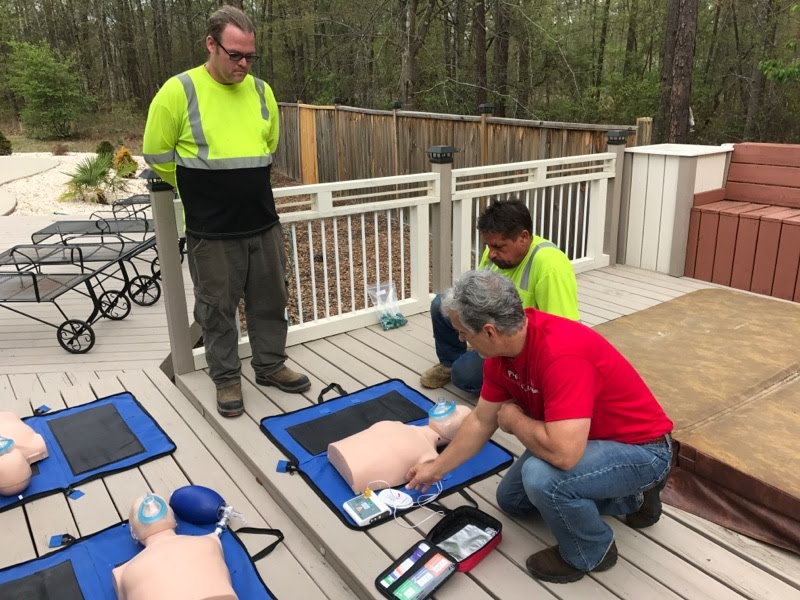
- Hands-On Practice: Learning proper technique through repeated practice on training mannequins
- Real-Scenario Training: Practicing emergency response in realistic situations
- Expert Instruction: Learning from certified professionals who can correct technique and answer questions
- Certification: Receiving credentials that meet workplace and volunteer requirements
- Refresher Training: Staying current with the latest guidelines and maintaining skills
Take Action Today
Don’t wait for an emergency to wish you had CPR training. The life you save could be a family member, colleague, or stranger who desperately needs help. Professional CPR certification gives you:
- Confidence: Knowing you can respond effectively in emergencies
- Skills: Proper techniques that can make the difference between life and death
- Certification: Credentials for employment or volunteer opportunities
- Peace of Mind: Being prepared to protect the people you care about
Ready to become someone’s hero? Sign up for CPR certification classes and join the ranks of everyday people prepared to save lives.
Course Options Available
Quality CPR training programs offer flexible options to fit your schedule:
- Basic Life Support (BLS): Comprehensive training for healthcare providers
- Heartsaver CPR/AED: Essential skills for workplace and community responders
- Pediatric CPR: Specialized training for infants and children
- CPR/First Aid Combo: Complete emergency response training
- Group Training: On-site classes for businesses and organizations
The Ripple Effect of Preparedness
The fictional White House emergency illustrates a profound truth: when properly trained individuals are present during cardiac emergencies, lives are saved. But the impact extends far beyond that single moment.
Building Safer Communities
Every person who completes CPR certification contributes to community safety. Trained individuals become links in a chain of survival that includes:
- Early Recognition: Identifying cardiac emergencies quickly
- Immediate Response: Beginning CPR without delay
- Professional Care: Supporting advanced medical interventions
- Recovery Support: Understanding post-emergency care needs
Workplace Benefits
Organizations that invest in CPR training for their employees see multiple benefits:
- Improved Safety Culture: Demonstrating commitment to employee wellbeing
- Emergency Preparedness: Being ready for medical emergencies
- Team Building: Training together builds confidence and cooperation
- Liability Protection: Meeting safety training requirements
- Community Reputation: Being known as a prepared, caring organization
Making the Commitment
The story of President Martinez’s emergency and James Rodriguez’s heroic response serves as a powerful reminder: CPR skills turn ordinary people into lifesavers. The training is accessible, affordable, and absolutely essential.
Your Call to Action
Emergency situations don’t announce themselves in advance. Cardiac arrests happen suddenly, without warning, to people of all ages and backgrounds. When they occur, there’s no time to learn CPR—you either know it or you don’t.
Don’t leave life and death to chance. Enroll in CPR certification training and gain the skills that could help you save a life. Whether it’s a family member at home, a colleague at work, or a stranger in public, your training could make all the difference.
The next emergency might not involve the President of the United States, but to someone’s family, the person you help will be just as important. Get trained, stay certified, and be ready to answer the call when someone’s life hangs in the balance.
Contact Pulse CPR School today to schedule your certification course and become part of the solution.
This fictional story is designed to illustrate the importance of CPR training. All characters and events are imaginary, but the techniques and outcomes described are based on real medical knowledge and emergency response protocols. For actual CPR training and certification, contact qualified instructors through professional programs.